About the United Kingdom
The United Kingdom includes England, Scotland, Wales, and Northern Ireland. It is one of the most popular destinations for international students thanks to its historic universities, world-class research, and rich culture.
Major cities include London, Manchester, Birmingham, Glasgow, Liverpool, Newcastle, Nottingham, and Bristol.
Official Language
English
Population
~63 Million
Academic Heritage
800+ years of excellence
Major Cities and Universities
London
Home to Imperial, LSE, UCL, and King's College. Global financial and cultural center.
Oxford
Historic university town with the University of Oxford and world-renowned research.
Cambridge
Prestigious University of Cambridge known for science and engineering.
Manchester
Industrial city with the University of Manchester and strong business programs.
Edinburgh
Scottish capital with the University of Edinburgh and a rich cultural heritage.
Durham
University of Durham with strengths in law, medicine, and sciences.
Why Choose the United Kingdom?
World-class education with global recognition
Lower GPA requirements at many institutions
Apply without IELTS or PTE at select universities
Shorter duration: bachelor's 3 years, master's 1 year
Gap up to 10 years acceptable for master's
Work rights: 18 to 20 hours per week during study
Post-study work visa: up to 18 months
Hassle-free documentation process
Rich cultural heritage and modern facilities
Pathway to permanent residence
Types of Institutions
Further Education Colleges
Vocational education programs
Universities
Undergraduate and postgraduate degrees
Private Schools
Fee-paying independent institutions
Top 10 Popular Courses (2025)
Business and Management
Engineering (Electrical, Mechanical, Civil)
Computer Science and IT
Medicine and Health Sciences
Law
Social Sciences (Psychology, Sociology, Politics)
Arts and Humanities (English, History, Philosophy)
Education and Teaching
Design (Fashion, Graphic, Product)
Hospitality and Tourism Management
Prerequisites for Studying in the UK
Academic qualifications that meet entry criteria.
- Bachelor’s: GPA 2.4 onwards
- Master’s: 55% in Bachelor’s (4 yrs) 60% (3 yrs)
English language Proficiency (IELTS, PTE, or other accepted tests)
- Foundation: IELTS 5.5
- Bachelor’s: IELTS 6.0 (no band below 5.5) / PTE equivalent.
- Master’s: IELTS 6.5 (no band below 6.0) / PTE equivalent.
Some universities may waive the English test.
- Offer Letter from a UK university.
- CAS (Confirmation of Acceptance for Studies)
- Proof of funds (tuition + living costs).
- Valid passport and photographs.
- Health and Character certificates if required.
Expenses Overview
Tuition Fees - Undergraduate
GBP 10,000 - 38,000 annual
Tuition Fees - Postgraduate
GBP 12,000 - 30,000 annual
Living Costs - London
GBP 1,529 per month (up to 9 months)
Living Costs - Outside London
GBP 1,171 per month (up to 9 months)
Health Surcharge (IHS)
GBP 776 per year
Visa Fee
GBP 524
Medical Charge
Required Documents
Offer Letter
- Complete Academic Documents SEE and SLC (Bachelor’s) up to bachelor’s (Master’s)
- CV
- English Language Test Score (Eg; IELTS/PTE) / Medium of Instruction (MOI)
- Passport Copy
- Personal Statement
- Letters of Recommendation
CAS (Confirmation of Acceptance for Studies)
- Valid passport copy
- Offer letter from the university
- Proof of English proficiency (IELTS/TOEFL)
- Proof of financial resources (Bank Statement/ Loan Approval)
- Academic qualifications (transcripts, certificates)
- Visa application form
- Any other documents requested by the university
UK Visa Applications
- Valid Passport
- Offer Letter from a UK university
- CAS (Confirmation of Acceptance for Studies)
- Proof of English language proficiency
- Proof of financial resources (bank statements, sponsorships)
- TB test results
- Passport-sized photographs
- Health Insurance coverage
Scholarships for International Students
- Merit-based scholarships by UK universities
- Chevening Scholarships for outstanding international students.
- Commonwealth Scholarships for selected courses.
- Department-specific awards depending on the faculty.
FAQ
What are the main intakes for UK universities?+
UK universities typically offer three intakes:
- September/October (Fall): the primary and largest intake for most courses.
- January/February (Winter): a major secondary intake, popular for Business and Master's programs.
- May (Summer): a smaller intake offered by select universities for specific foundation or postgraduate courses.
Do I need a CAS to apply for my visa?+
Yes. The Confirmation of Acceptance for Studies (CAS) is a unique reference number issued by your university once you accept an unconditional offer and pay your tuition deposit.
How much money do I need to show for my visa in 2026?+
You must show enough to cover first-year tuition plus living costs for up to 9 months:
- In London: GBP 1,529 per month (total GBP 13,761).
- Outside London: GBP 1,171 per month (total GBP 10,539).
What is the Immigration Health Surcharge (IHS)?+
The IHS lets you use the NHS and is paid as part of your visa application. As of 2026, the student rate is GBP 776 per year.
- Example: for a 1-year Master's, you will likely pay GBP 1,164, covering the year plus the extra 4 months granted on your visa.
Can I work part-time in the UK?+
Yes, if you study at a higher education institution (university):
- Term-time: up to 20 hours per week.
- Vacation periods: full-time.
- Restrictions: no self-employment, professional sportsperson roles, or full-time permanent vacancies.
Can I bring my family (dependants)?+
Under rules that shifted in 2024 and remain in effect for 2026, only students on postgraduate research programs (like a PhD) or a government-sponsored Master's can bring dependants. Students on standard taught Master's programs can no longer bring dependants.
How long can I stay and work after I graduate?+
The Graduate Route visa allows you to stay and work (or look for work) at any skill level:
- Bachelor's/Master's graduates: eligible for 2 years.
- Note: discussions may reduce this to 18 months for applications after January 2027, so 2026 graduates should apply quickly.
- PhD graduates: eligible for 3 years.
What is the cost of the Graduate Visa?+
In 2026, the application fee is about GBP 822, plus the IHS at the full rate of GBP 1,035 per year since you are no longer a student.
Discover the United Kingdom
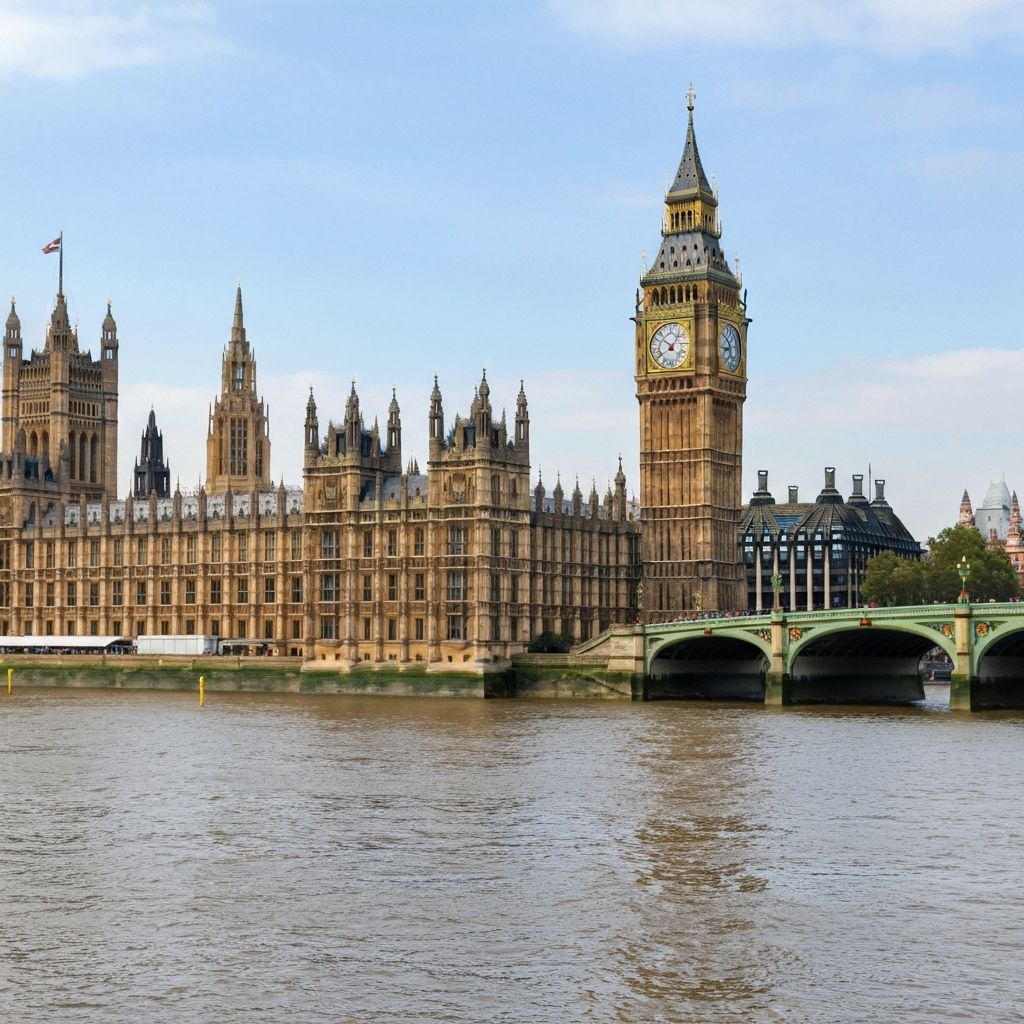
Big Ben and the Houses of Parliament in London
The UK blends centuries of history with modern innovation, offering an unmatched academic experience.