South Korea
South Korea is a hub of innovation and excellence in education, attracting international students with affordable living costs, advanced technology, and vibrant campus life.
With strong government support and a fast-growing economy, it offers world-class education with excellent post-study opportunities.
Key Highlights for Study in South Korea?
Affordable tuition & living costs compared to Western destinations.
Strong global recognition and high degree value.
Innovative industries offering unique internship/job pathways.
Rich student experience: multicultural campuses, safe cities, K-culture immersion.
Scholarships & government support: e.g., Global Korea Scholarship (GKS) for fully-funded study
PSW of 3 years
Work while you study. Students can usually work 21 hrs a week (during study) & full-time in breaks.
Major Cities
Seoul
Busan
Daejeon
Incheon
Daegu
Gwangju
Top 10 Popular Courses for International Students
Engineering and Technology
Computer Science and Information Technology
Business Administration and Management
Natural Sciences
Health Sciences, Medicine, and Nursing
Korean Language and Cultural Studies
Hospitality and Tourism Management
Fashion Design and Creative Arts
Agriculture and Environmental Sciences
Humanities and Social Sciences
Eligibility for Admission
Bachelor's Level - D2
- Minimum 10+2 or equivalent (GPA 3.2)
- IELTS 5.5 overall no band <5
Bachelor's Level - D2 Code
- Minimum 10+2 or equivalent (GPA 2.8 to 3.19)
- IELTS 5.5 overall no band <5
- Gap up to 4 years acceptable
Master's Level
- Bachelor's degree (GPA 2.5)
- IELTS 5.5 overall no band <5
- 6-7 years gap acceptable
D4 category: D4-1 (Korean Language Program)
- GPA 2.8
- No IELTS
- Gap up to 4 years (age below 24)
- No pre rejection
D4 category: D4-7
- GPA 2.7 and above
- IELTS 5.5 overall no band <5
- Gap up to 4 years
Application Procedure with Required Documents
Offer
- Academic transcripts verified by NEB, MOE, and MOFA
- Character certificates (all levels)
- Language proficiency: English (IELTS/TOEFL) or Korean (TOPIK) depending on the program
- Passport
- Face interview (if required)
Admission Offer and Invoice
- Admission offer from a Korean university with invoice
NOC and Fee Payment
- Get NOC and pay fees
Receive COA
- Receive COA
Visa Lodgement
- LOC
- COA
- Proof of funds to cover tuition and living expenses.
- Ward Documents (Relationship Verification, Annual Income Verification, Occupation Verification, Property Valuation, Tax Clearance, Birth Verification)
- CA Summary
- Photo 45mm by 35mm(white background)
- Medical Report (Civil, Teku, Korea Nepal)
Scholarships
- The Global Korea Scholarship (GKS) offers tuition, airfare, and living stipend.
- Many universities offer internal merit-based scholarships.
- Early application and strong academic record increase scholarship chances.
FAQ
Do I need to know Korean to study in South Korea?+
Not necessarily. Many universities offer English-Track programs (GSIS - Graduate School of International Studies). However:
- English-Track: requires IELTS (usually 5.5-6.5) or TOEFL
- Korean-Track: requires a TOPIK score; most undergraduate programs need Level 3 for admission and Level 4 for graduation
What are the main academic intakes?+
South Korea has two major intakes:
- Spring (March): primary intake (applications open Sept-Nov)
- Fall (September): secondary intake (applications open May-June)
How much money do I need to show for a D-2 visa in 2026?+
Financial requirements were eased to attract more students. A bank statement is required:
- Seoul/Metropolitan Area: approx. $18,000-$20,000 USD
- Regional Universities: approx. $15,000-$18,000 USD
- Language Trainees (D-4 Visa): approx. $10,000 USD
Can I work part-time while studying?+
Yes, but there are strict rules. You generally must wait 6 months after arrival (D-4) or apply immediately (D-2) for a permit.
- Hours: undergraduates up to 25 hours/week; postgraduates up to 35 hours/week
- Weekends/Vacations: usually unlimited
- Requirement: GPA above a certain level (usually 2.0/4.0) and a minimum TOPIK score for some sectors
Can I stay in Korea after graduation?+
Yes. You can apply for a D-10 (Job Seeking) Visa for 6 months, extendable up to 3 years for certain graduates. After securing a professional job, you can convert to an E-7 visa.
Is it easy to find a job in Korea after graduating?+
It is competitive. Success usually depends on:
- Korean proficiency: TOPIK 5 or 6 for most office jobs
- Field of study: STEM graduates have more openings and a faster residency track
Explore South Korea
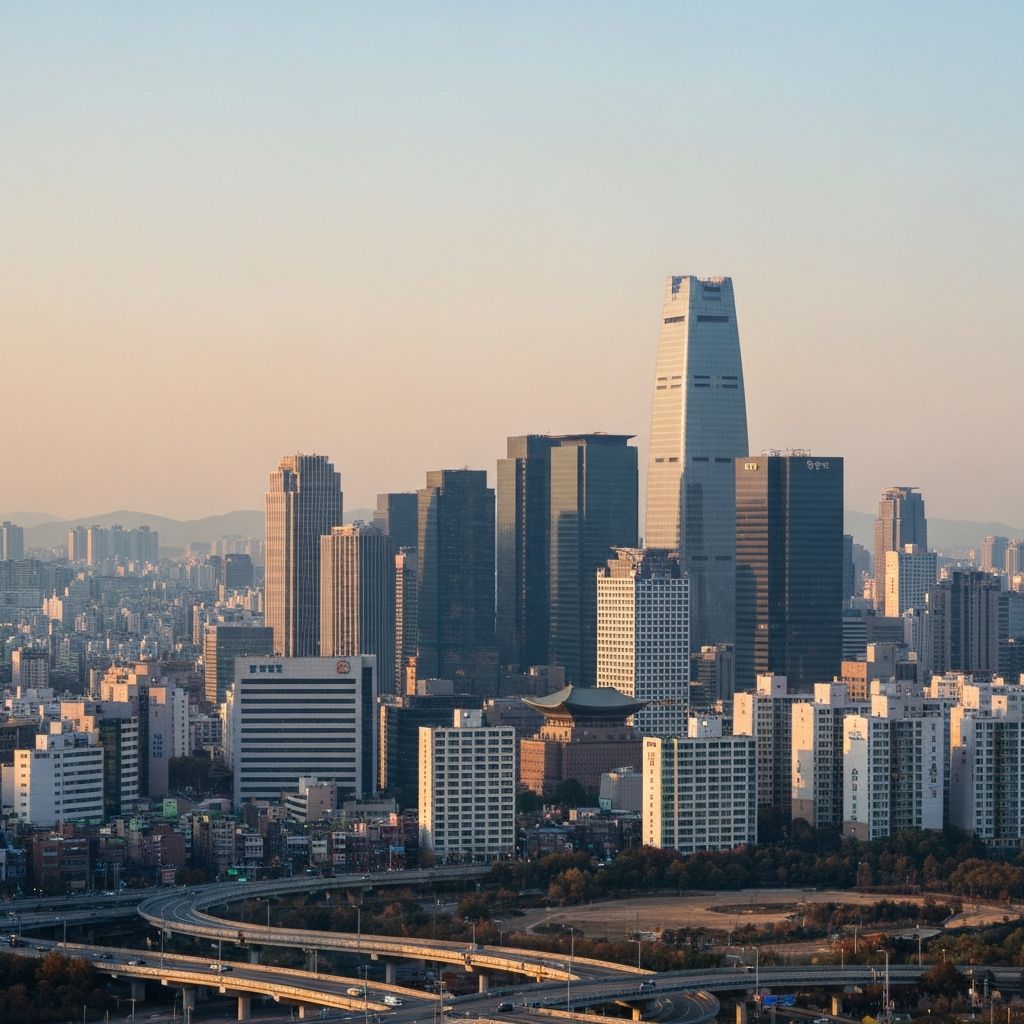
Seoul - dynamic capital with cutting-edge technology and culture
South Korea offers a unique blend of high-tech innovation and cultural heritage for international students.