STUDY IN CANADA
Canada is home to 11 of the 250 best universities worldwide. It’s the world's second-largest nation, also one of the most developed nations in the world. Although it has closer ties to the US, it has a close historical relationship with Britain. With a population of just over 36 million, the nation is modest in relation to its size, but during the past 150 years, it has welcomed more than 17 million immigrants from all over the world. English and French are Canada's two principal official languages. Canada is regarded as a progressive country with a modern, accepting population, regardless of the country's cultural diversity.
According to the Economist Intelligence Unit's 2018 livability study, three of Canada's biggest cities were among the top 10 places in the world to live. Additionally, it was listed among the top 10 most peaceful nations in the world by the Global Peace Index 2018 and ranked seventh in the United Nations' 2018 World Happiness Report. Canada consistently scores in the top 10 of the UN Human Development Index. These are some of the main factors that contribute to Canada's continued appeal as a travel destination, aside from the high caliber of education.
Top Universities
11 of the world's top 250
Population
~36 Million
Quality of Life
Top 10 most peaceful nations
Best Cities to Study in Canada
Toronto
Montreal
Vancouver
Ottawa
Quebec
Edmonton
Calgary
Winnipeg
Waterloo
Halifax
Key Highlights for Study in Canada
Top ranked universities and strong education system
Post-study work opportunities
Affordable tuition fees
Good potential for employment after course completion
Natural beauty and quality of life
Multicultural society and safe environment
PGWP of up to 3 years
International students can work up to 20 hours per week during academic sessions and full time during breaks
Types of Degrees in Canada
Students can choose from colleges, universities or technical institutes where they can opt to take:
Diploma and Certificate Programs
Associate Degree (2-year Associate / 4-year Applied)
Undergraduate
Bachelor’s Degree (3 or 4 years full-time)
Postgraduate
Master’s Degree / Doctoral Degree (2 years)
Popular Courses in Canada
Engineering
Computer Science and IT
Business
Law
Hospitality and Tourism Management
Media and Communication
Education
Architecture
Economics
Fine Arts
Application Intakes
Fall Semester
Starts in September
Winter Semester
Starts in January
Summer Semester
Starts in April/May (limited programs)
It is suggested that you apply a minimum of 6 to 9 months prior to the application deadline.
Fee Structure (Average & Verified Data)
Undergraduate Courses
$12,000 - $25,000
Postgraduate Courses
$18,000 - $30,000
Depending on the university, program, and particular situation, these numbers may differ greatly. For the most recent information on tuition costs for your chosen field of study, visit the official websites of the schools you are considering.
Document Checklist
Academic certificates and transcripts
Proof of English language proficiency
Proof of acceptance
Valid passport
Two recent passport-size photos
Statement of Purpose
CV
Recommendation letters
Financial documents: education loan, bank statements, annual income verification with supporting documents, CA summary, property valuation
Relationship verification
Birth verification
Address verification
Police report
FAQ
Is there a limit on how many international students can study in Canada?+
Yes. For 2026, Canada has set a target of 408,000 study permits. Most undergraduate and college-level students now require a Provincial Attestation Letter (PAL) from the province where they intend to study before applying for a visa.
Are any students exempt from the new study permit cap?+
Yes, the following groups do not need a PAL and are exempt from the cap:
- Master's and Doctoral (PhD) degree students
- Elementary and secondary school students (K-12)
- Current study permit holders applying for an extension
What are the main intakes?+
Canada has three common intakes:
- Fall (September): the primary intake with the most course availability
- Winter (January): a major secondary intake for many programs
- Summer (May): usually reserved for short-term or vocational courses
How much proof of funds do I need for 2026?+
For 2026, a single applicant must show CAD 22,895 for living expenses, in addition to first-year tuition and travel costs. In expensive cities like Toronto or Vancouver, closer to CAD 30,000 is recommended for realistic costs.
What is a GIC (Guaranteed Investment Certificate)?+
While not mandatory for all, many students (especially from Student Direct Stream countries) purchase a GIC of at least CAD 22,895 from a Canadian bank. The amount is released in monthly installments after arrival to help manage expenses.
How many hours can I work off-campus?+
As of late 2024 and continuing into 2026, the off-campus work limit is 24 hours per week during academic sessions. You can still work full-time during scheduled breaks.
Can my spouse get a work permit?+
New 2025/2026 rules restrict this. Spousal open work permits are generally only for partners of students in:
- Master's or Doctoral programs (at least 16 months)
- Professional degree programs (Medicine, Law, Pharmacy)
Can I stay and work after I graduate?+
Yes, but the rules for 2026 have tightened:
- University graduates (Bachelor's/Master's/PhD): eligible for up to a 3-year PGWP regardless of field of study.
- College/Diploma graduates: eligible for a PGWP only if the field is linked to a labor shortage (healthcare, STEM, skilled trades).
- Language requirement: PGWP applicants must prove English or French proficiency (CLB 7 for university grads, CLB 5 for college grads).
Discover Canada
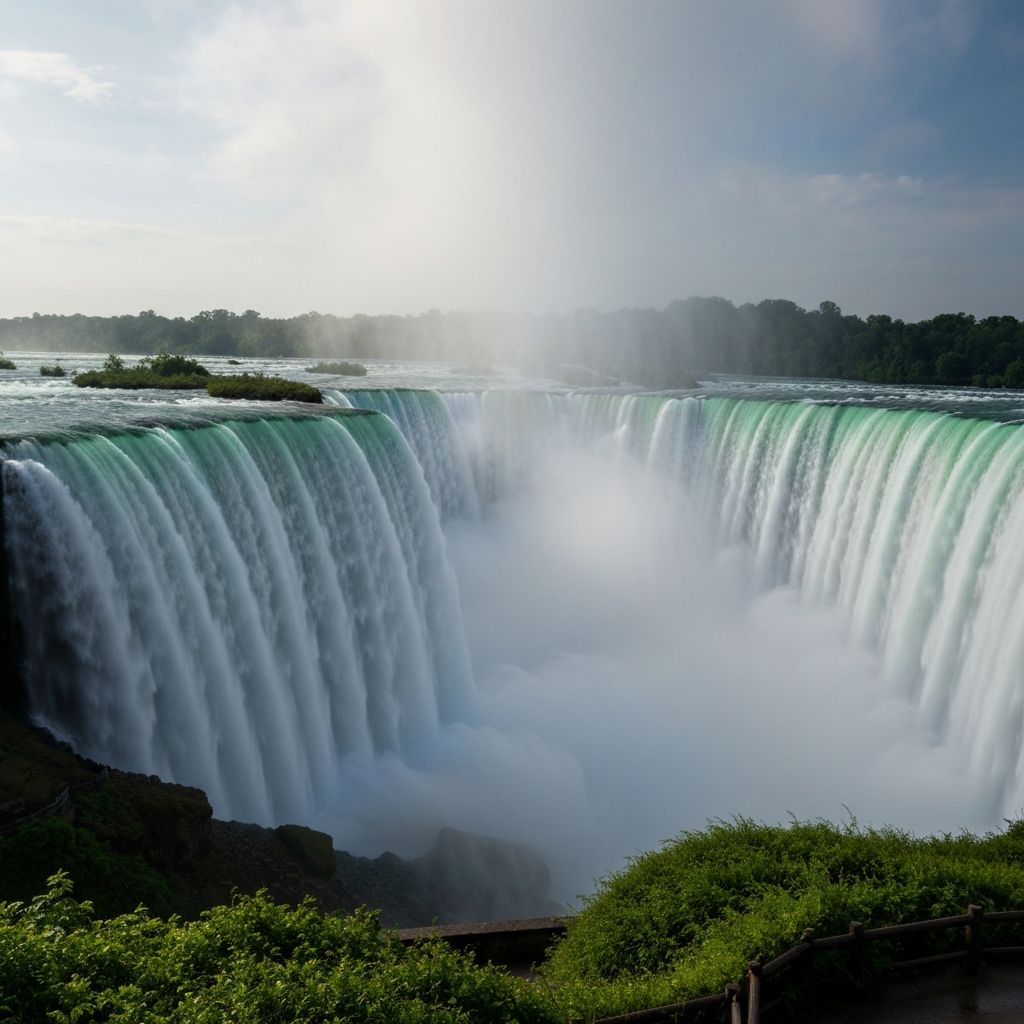
Niagara Falls - one of the world's most iconic natural wonders