About Australia
Australia is a vast, developed nation known for its natural beauty, vibrant multicultural cities, and world-leading universities. With about 26 million people, it offers a strong blend of modern infrastructure, outdoor lifestyle, and high-quality education.
Official Language
English
Population
~26 Million (2025)
Quality of Life
Top 10 globally
Major Cities and Universities
Sydney
Home to the University of Sydney and UNSW. Known for iconic landmarks and vibrant culture.
Melbourne
Cultural capital with the University of Melbourne and Monash University.
Brisbane
Growing tech hub with the University of Queensland and warm climate.
Perth
Relaxed coastal city with the University of Western Australia.
Canberra
Capital city with Australian National University (ANU).
Adelaide
Affordable city with a strong focus on engineering and healthcare.
Key Highlights for Studying in Australia
World-class universities and industry connections
English-speaking destination with strong academic reputation
High quality of life and safe environment
Work while studying: 20 hours per week during study
Post-study work visa: up to 5 years for certain fields
Multiple intakes throughout the year
Generous scholarship opportunities
Diverse student community from over 100 countries
Pathway programs for students needing preparation
Popular Courses
Information Technology and Software Engineering
Business and Commerce
Civil and Mechanical Engineering
Nursing and Medicine
Accounting and Finance
Construction Management
Environmental Science
Business Analytics and Data Science
Hospitality and Tourism Management
Mining and Resources Engineering
Fee Structure (Average)
Diploma or Foundation
AUD $15,000 - $22,000/year
Bachelor's Degree
AUD $20,000 - $45,000/year
Master's Degree
AUD $25,000 - $50,000/year
Scholarships for International Students
Government
- Australia Awards Scholarships
- Endeavour Scholarships and Fellowships
- Australian Development Scholarships
Institutional
- University-specific Scholarships
- Go8 Scholarships
- International Student Merit Scholarships
FAQ
What are the minimum GPA and English score requirements?+
For 2026, most Australian universities and colleges generally follow these benchmarks:
- Bachelor's degree: minimum GPA 2.8 in Grade 12 (NEB). IELTS 6.0 (no band less than 5.5) or PTE 50.
- Master's degree: minimum 50-60% in a bachelor's. IELTS 6.5 (no band less than 6.0) or PTE 58.
What is the Genuine Student (GS) requirement?+
Replacing the old GTE system, the GS requirement uses targeted questions in your visa application. You must show your primary intention is to study and explain why you chose Australia, why you are not studying in Nepal, and how the course helps your career back home.
How much bank balance do I need to demonstrate?+
To get a visa, you must show you can cover tuition, travel, and living costs. For 2026:
- Annual living expense: at least AUD 29,710 (approx. NPR 26-27 lakhs).
- Tuition fees: one full year of fees (varies by course).
- Travel/airfare: approx. AUD 2,000.
- Note: most Nepalese students prepare to show a total of NPR 55-75 lakhs depending on the city and university.
How many hours can I work while studying?+
As of current 2026 regulations, international students can work up to 48 hours per fortnight while classes are in session and unlimited hours during scheduled breaks.
What are the Post-Study Work (PSW) rights in 2026?+
After graduating, you can apply for the Subclass 485 visa:
- Bachelor/Master (Coursework): up to 2 years.
- Master (Research)/PhD: up to 3 years.
- Regional bonus: an extra 1-2 years if you study and live in regional areas (Adelaide, Perth, Hobart).
What is the best city for Nepalese students?+
It depends on budget and job competition:
- Sydney/Melbourne: more job opportunities, but very high rent and living costs.
- Adelaide/Brisbane/Perth: more affordable, lower competition for part-time jobs, and extra points for PR pathways.
Why do visas for Nepalese students get rejected?+
The most common reasons in 2026 include:
- Weak GS statement
- Unclear financial sources
- Undefined gap years
Life in Australia
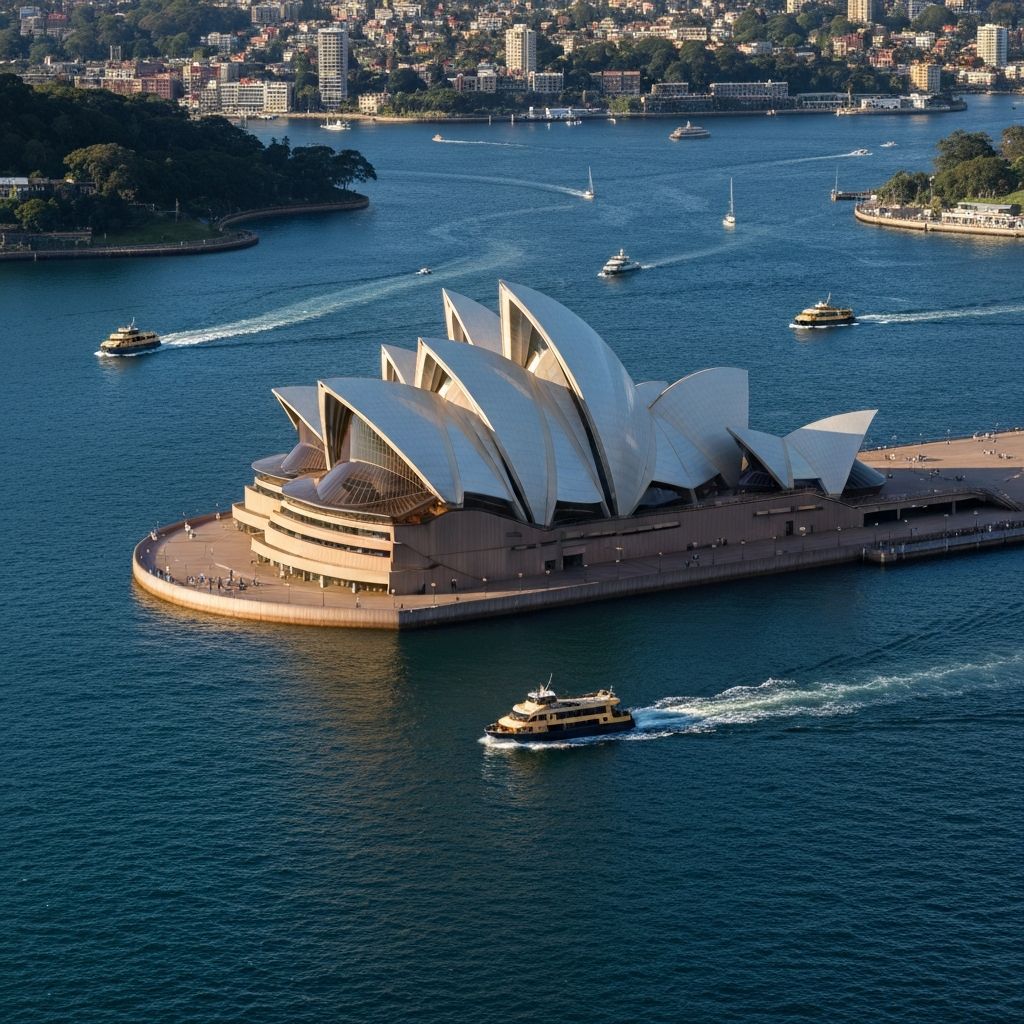
Sydney Opera House - iconic architectural masterpiece